Atlanta Tech Trade Shows: Booth Design & Strategy Guide
Atlanta has quietly become one of the most important stops on the technology trade shows calendar. Between a world-class convention campus, a fast-growing venture ecosystem, and a location that puts most of the U.S. within a two-hour flight, the city checks nearly every box exhibitors look for when deciding where to invest their budget. If your company is planning a presence at Atlanta technology trade shows for the first time, or if you exhibit here every year and want to sharpen your trade show strategy, this guide breaks down what makes the city work, and how to plan a custom trade show booth design that actually performs.
Why Atlanta Is a Top Destination for Technology Trade Shows
At the center of Atlanta's convention economy is the Georgia World Congress Center (GWCC), the fourth-largest convention center in the country and the largest LEED Gold-certified convention facility in the world. The campus spans roughly 3.9 million square feet across three interconnected buildings, with 1.5 million square feet of exhibition space, 12 exhibit halls, and 98 meeting rooms, providing enough capacity to host more than a million trade show attendees a year.
Location is a major part of the appeal. Hartsfield-Jackson Atlanta International Airport is the busiest airport in the world, which means exhibitors, sales teams, and attendees can fly in from nearly anywhere in North America with a direct flight and often be at the show floor within an hour of landing. Combine that with downtown hotel density, MARTA rail access straight to the GWCC campus, and a lower overall cost of doing business than New York, Chicago, or the Bay Area, and it's easy to see why organizers keep bringing major technology events back to Atlanta year after year.
The city's own technology sector adds another layer of demand. Atlanta's tech ecosystem raised roughly $1.2 billion in venture capital across 82 funding rounds in 2025 alone, and city officials have set a public goal of becoming a top-five U.S. tech hub. The metro is home to major enterprise anchors like The Home Depot, Delta Air Lines, Coca-Cola, Cox Enterprises, UPS, and NCR Voyix, alongside a dense startup and scale-up community fed by Georgia Tech, Emory, Georgia State, and a cluster of accelerators including Techstars Atlanta and the ATDC. Fintech, cybersecurity, logistics technology, and healthcare technology are particular strengths, which is exactly why so many of the region's flagship trade shows and conferences fall into those categories.
The Largest Technology and Business Conventions in Atlanta
While Atlanta hosts events across nearly every industry, several stand out for exhibitors focused on technology, security, and innovation:
- Global Security Exchange (GSX) is one of the most comprehensive events for security professionals, bringing physical and cybersecurity leaders together at the GWCC each September, with more than 200 education sessions and a large exhibit hall covering everything from cyber risk to enterprise resilience.
- MODEX is a massive supply chain and logistics technology expo held every other year at the GWCC, featuring more than 1,000 exhibitors and live equipment demonstrations spanning robotics, automation, and warehouse technology.
- RE+ Southeast is a fast-growing regional show focused on solar, clean energy, and battery storage technology, connecting installers, developers, and utility companies.
- FABCON is a deep-dive technical conference built around the Microsoft Fabric data platform, which selected the GWCC for its spring 2026 event to connect engineers and IT decision-makers.
- TECHSPO Atlanta is a more intimate technology expo covering mobile, AdTech, MarTech, and SaaS, typically held at a downtown hotel venue rather than the convention center.
- Venture Atlanta and Atlanta Tech Week, while structured more as investor and founder conferences than traditional exhibit halls, anchor the city's startup calendar and increasingly include sponsor activations and demo showcases.
Alongside these are dozens of adjacent trade shows, ranging from IWF Atlanta (woodworking technology and design) to CAMX (composites and advanced materials), that regularly draw exhibitors experimenting with new fabrication and material technology in their booth builds.
Planning an Exhibit: What Atlanta Exhibitors Need to Know
A successful trade show presence in Atlanta starts long before the show opens. Whether you're exhibiting at a 10×10 inline booth or a large island display, the fundamentals of trade show strategy are the same: define your objectives, build a trade show booth design that supports them, and manage the logistics so nothing is left to chance on-site.
Choosing the Right Booth Size
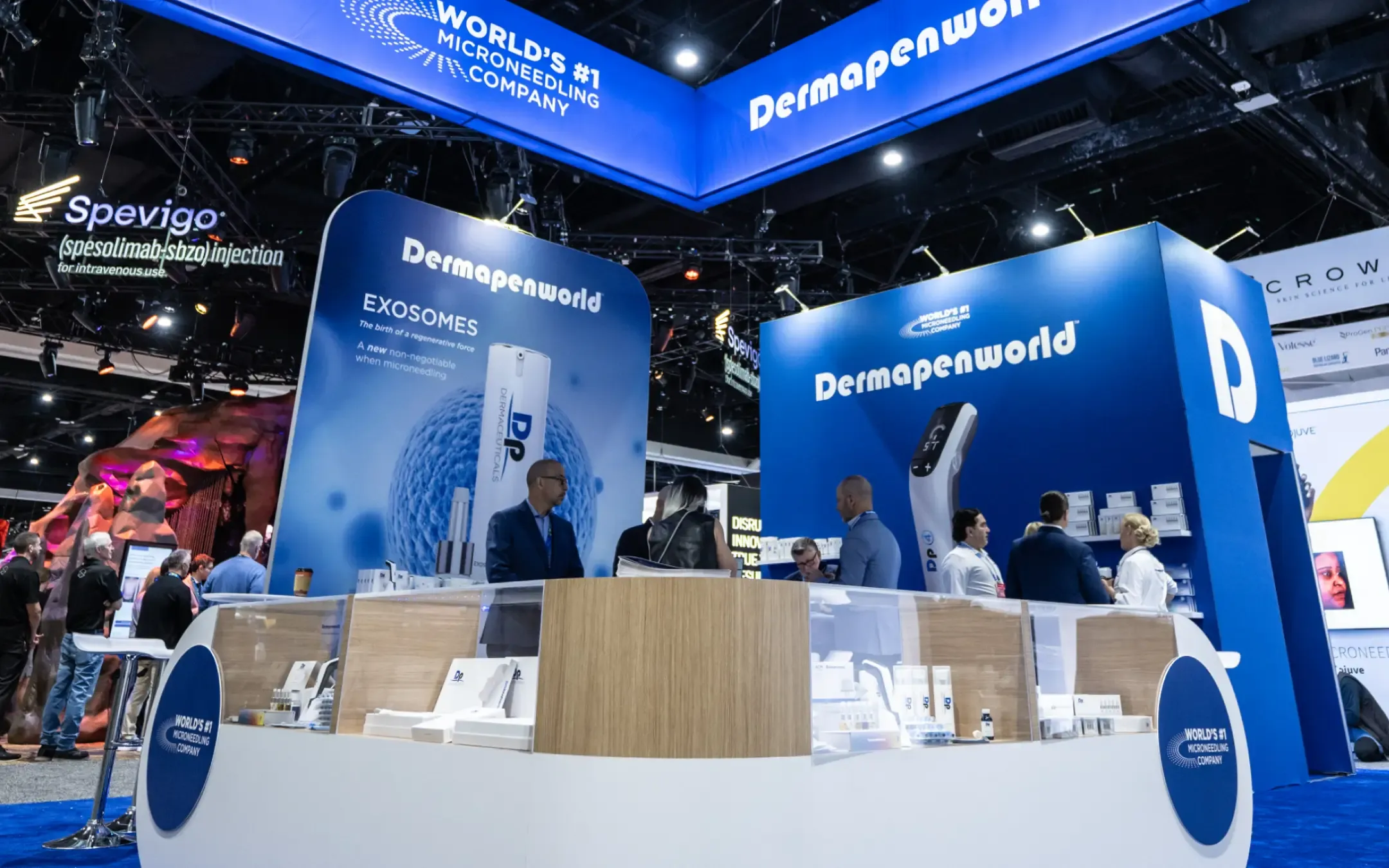
Booth size should follow strategy, not budget alone. A 10×10 or 10×20 inline booth is often enough for lead generation and brand visibility at a mid-size regional show, while product launches, live demos, or executive briefing meetings usually call for a 20×20 island or larger. At high-traffic Atlanta shows like GSX or MODEX, exhibitors competing for attention on a crowded floor often benefit from double-deck structures, which add a second level for private meetings or VIP hospitality without expanding the footprint.
Rental vs. Custom Exhibits
This is one of the most common early decisions exhibitors face, and there's no universally right answer:
- Custom exhibits make sense for brands attending the same flagship show annually, or those that need a highly specific structural design, architecture, or technology integration that a stock rental can't replicate.
- Rental exhibits offer a fully branded, high-impact look without the long-term capital investment, storage costs, or refurbishment overhead of owning a booth. They're ideal for companies testing a new market, exhibiting at multiple shows in a single season, or wanting the flexibility to change their design as their product and messaging evolve.
A well-run custom rental program can deliver a one-of-a-kind appearance at a rental price point, which is worth exploring if you're unsure which direction fits your budget and show calendar.
Trade Show Logistics in Atlanta
Freight and logistics deserve early attention, especially at the GWCC, where the marshaling yard accommodates roughly 600 trucks and drayage timing can significantly affect your install schedule. Electrical, internet, plumbing, and rigging services must be ordered directly through the venue, and exhibitors who order at least 21 days in advance typically qualify for a meaningful discount. Freight is not permitted on passenger elevators, and oversized items cannot go on escalators, which are details that seem minor until they threaten your install timeline.
Coordinating shipping and drayage, general contractor services, and installation crews across a show of this scale is exactly the kind of work that benefits from experienced project management rather than a DIY approach.
Budget Considerations
Trade show budgets should account for more than booth fabrication. A realistic Atlanta exhibit budget typically includes:
- Booth space rental (charged per square foot by the show organizer)
- Design, fabrication, or rental costs
- Graphic production
- Shipping, drayage, and material handling
- Installation and dismantle labor
- Electrical, internet, and AV services ordered through the venue
- Travel, lodging, and staffing for the show team
- Lead capture technology and follow-up tools
Exhibitors who build a full budget upfront, rather than pricing the booth alone, are far less likely to face surprise costs once show services invoices arrive.
Timeline Before the Event
A general rule for major Atlanta shows: start planning custom exhibits 4 to 6 months out, and rental programs 2 to 3 months out. Graphic production deadlines, venue service order discounts, and freight scheduling all reward early planning. Waiting until 30 days before the show typically means paying rush fees and losing negotiating leverage on services.
Common Exhibitor Mistakes to Avoid
Even experienced exhibitors run into the same handful of problems on the Atlanta show floor:
- Underestimating drayage and material handling costs, which can rival or exceed booth space fees at large shows.
- Skipping a clear lead-generation plan; a beautiful booth with no defined qualification process wastes foot traffic.
- Overbuilding for the wrong audience; a design built for GSX's security audience may not resonate at a startup-focused event like Venture Atlanta.
- Under-training booth staff; even a flawless build underperforms if staff can't articulate the message quickly.
- No post-show follow-up plan; leads collected on-site lose value fast without a structured outreach cadence.
Maximizing ROI at an Atlanta Technology Trade Show
ROI comes from the full arc of the show experience, not just the three days on the floor. Strong booth design and placement matter, but so does pre-show outreach to schedule meetings, a staffing plan that keeps your best people on the floor during peak hours, and a lead capture system that feeds directly into your CRM. Interactive elements, such as touchscreens, product demos, and AR/VR experiences, tend to outperform static displays for both engagement and dwell time, which is one reason technology exhibitors increasingly integrate LED video walls and live demo stations into their booth design.
Post-Show Follow-Up
The show doesn't end when the hall closes. The strongest-performing exhibitors treat post-show debrief as a formal step: reviewing what worked, scoring and routing leads within days (not weeks), and capturing lessons that inform the next show's design and staffing decisions. This is also the point where storage and asset management matter; a well-maintained exhibit, stored properly between shows, saves significant cost on the next build versus starting from scratch.
How Elevate Exhibits Supports Atlanta Exhibitors
Elevate Exhibits was founded by a team with more than 40 years of combined experience serving major brands at industry-leading events, including RSA Conference, Black Hat, CES, and Dreamforce. While the company's home base spans San Francisco and Las Vegas, its project management, fabrication, and logistics network support exhibitors nationwide, including at Atlanta's GWCC and downtown convention hotels.
From initial concept and 3D renderings through structural engineering, graphic production, technology integration, and on-site installation and dismantle, Elevate Exhibits manages the full exhibit lifecycle as a single point of contact, reducing the coordination burden that typically falls on internal marketing teams juggling multiple vendors. For companies deciding between a custom build and a rental program, Elevate Exhibits' custom rental offering provides a fully branded presence with the flexibility rental exhibits are known for, backed by the same design and fabrication standards used on custom builds.
Frequently Asked Questions
What is the biggest venue for technology trade shows in Atlanta?
The Georgia World Congress Center is Atlanta's primary convention venue, offering 1.5 million square feet of exhibit space across 12 halls, and it hosts the majority of the city's largest technology, security, and industrial trade shows.
How far in advance should I book a custom trade show booth in Atlanta?
Most exhibitors should begin planning a custom exhibit 4 to 6 months before the show date, and a rental program 2 to 3 months out, to avoid rush fees and secure preferred freight and service scheduling.
Is it better to rent or buy a trade show booth for an Atlanta show?
It depends on your show frequency and budget. Rentals offer flexibility and lower upfront cost for occasional exhibitors, while custom-owned exhibits make more sense for brands returning to the same flagship show year after year.
What technology conferences are held in Atlanta each year?
Recurring Atlanta technology and innovation events include Global Security Exchange (GSX), MODEX, RE+ Southeast, TECHSPO Atlanta, and startup-focused gatherings like Venture Atlanta and Atlanta Tech Week.
Does Elevate Exhibits work outside of California and Nevada?
Yes. Elevate Exhibits supports clients nationwide, including exhibitors at major Atlanta shows, through its trusted partner network and project management team.
Planning your next Atlanta trade show? Elevate Exhibits handles design, fabrication, logistics, and installation from concept to teardown, and we’ll get back to you promptly with your quote.

Elevate Exhibits Team
Experiential Marketing Experts